THE FLOOD
Water before ignition
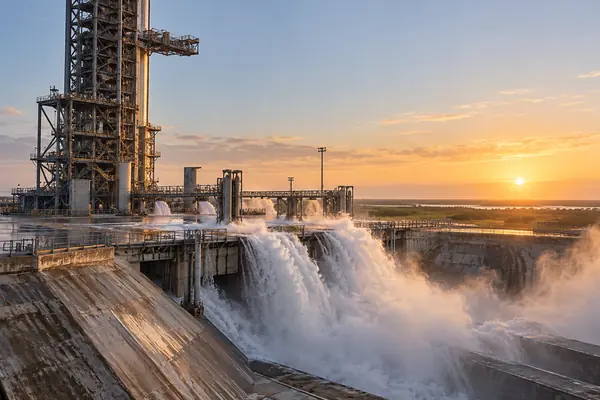
In a 2019 test at Kennedy's Pad 39B, about 450,000 gallons of water poured onto the flame deflector and launcher deck in 30 seconds, peaking at over a million gallons a minute.
The countdown soundeffectpads
THE SOUND OF A LAUNCH PAD
Just before a big rocket lifts off, its launch pad floods itself.
How loud is it?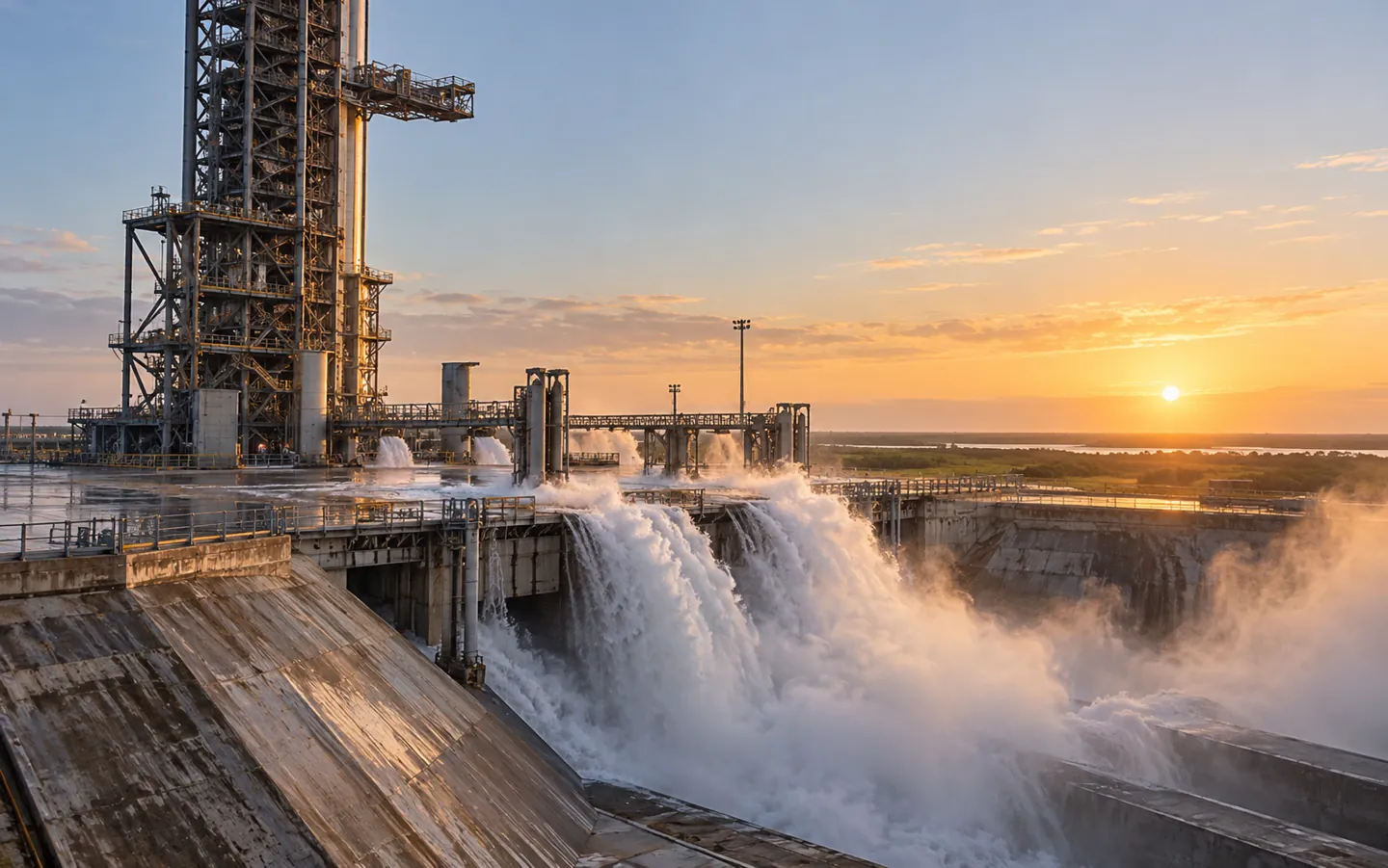
≈ 176 dBSLS at liftoff
The torrent is not mainly about fire. It is a sound suppression system: sheets of water that soak up some of the acoustic energy, so the pressure waves bouncing off the pad are less likely to shake and damage the rocket and its launcher.
At a glance
≈ 450,000 gallons
Water released onto Pad 39B in a 30-second test
Peak flow passed a million gallons a minute. NASA's team said the sheets of water knock the sound down by a few decibels.
TEST · NASA KENNEDY, 2019
5 dB
Overall noise cut by above-deck water nozzles ('rainbirds')
Best at a water-to-propellant flow ratio of 3.5; going up to 4.5 gave no further reduction in the 5% model tests.
SCALE MODEL · NASA MARSHALL, 2011
TWO NUMBERS WORTH KNOWING
Huge volumes of water,
a modest but valuable drop in noise.
Sources: NASA, Pad 39B Water Flow Test Comes Through Loud and Clear (2019); Counter and Houston, Ares I Scale Model Acoustic Test water sound suppression results (NASA Technical Reports Server, 2011).
HOW LOUD IS A LAUNCH?
Pick a figure to see where it sits. Every 10 dB is a tenfold jump in sound energy, so a few decibels matter more than they sound.
Figures come from different kinds of measurement: workplace limits and the Artemis reading are sound pressure where a person or microphone stands, while the Saturn V figure is the rocket's total sound power. Compare them with care.
THE SHORT ANSWER
Rocket noise is a load on the hardware,
not just a racket for the crowd.
THE FLOOD
In a 2019 test at Kennedy's Pad 39B, about 450,000 gallons of water poured onto the flame deflector and launcher deck in 30 seconds, peaking at over a million gallons a minute.
The countdownTHE TESTS
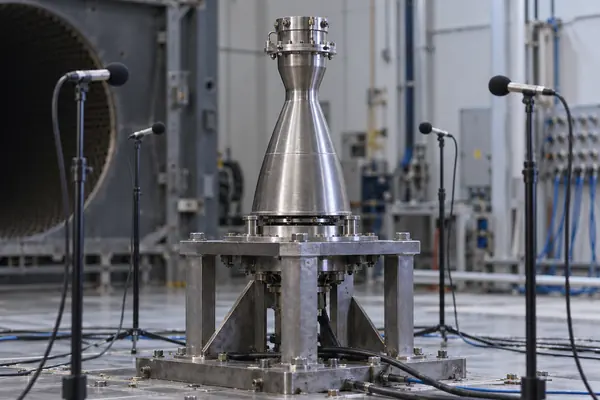
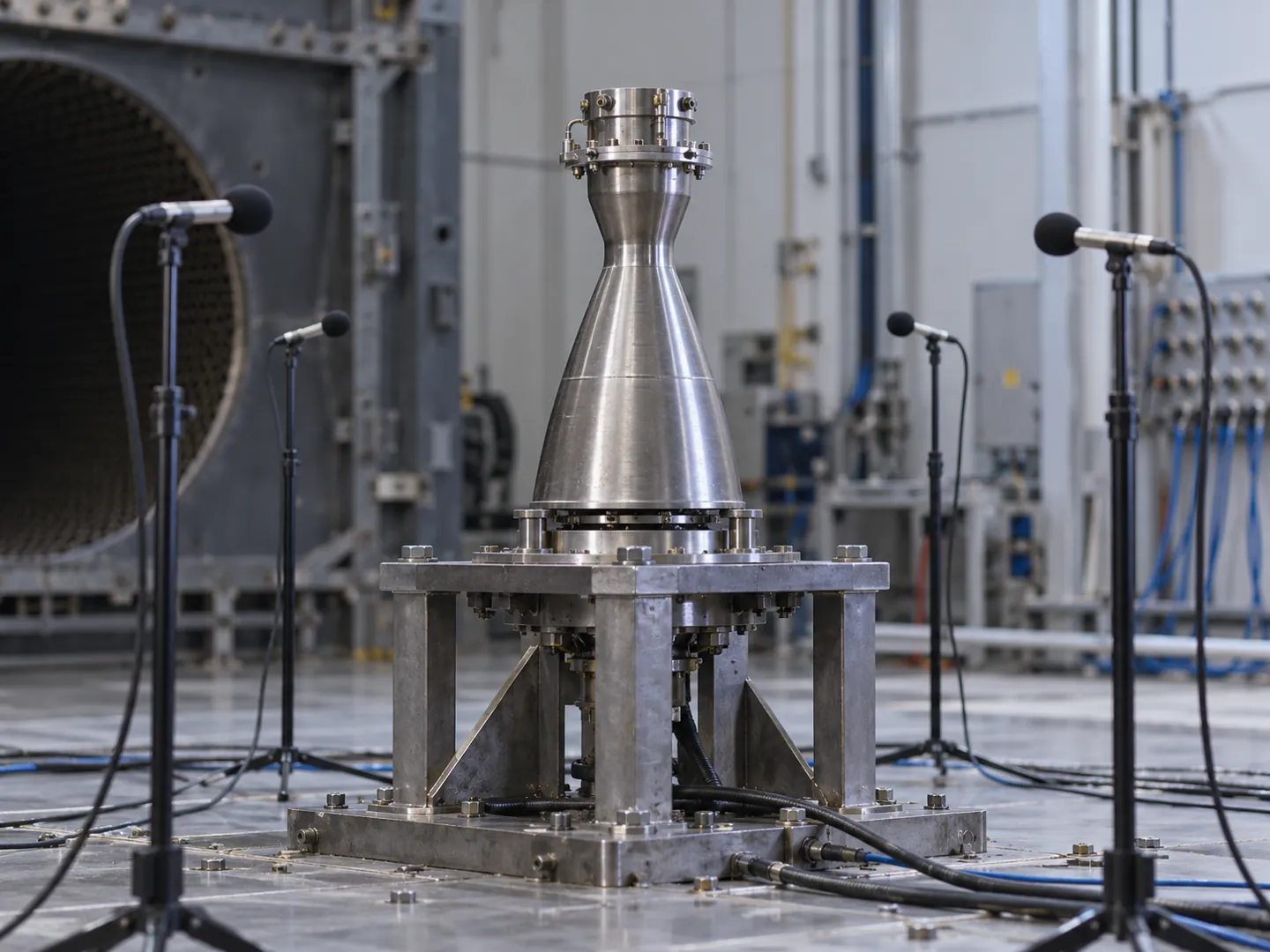
NASA tests 5% scale models fitted with microphones to measure liftoff noise and check how well the water systems work before a full-size launch.
See the numbersTHE DISTANCE
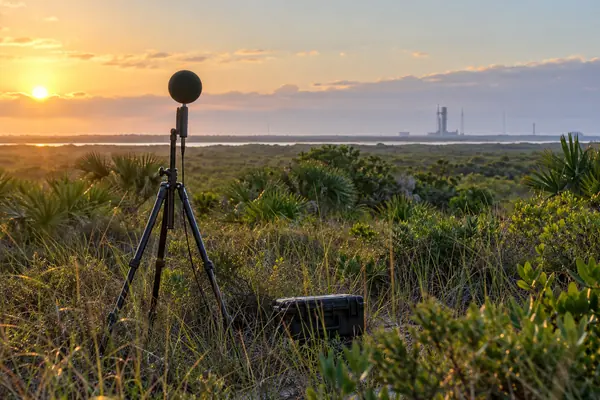
University acousticians measured NASA's Artemis I launch at about 136-137 dB nearly a mile from the pad, using nine stations around it.
Compare levels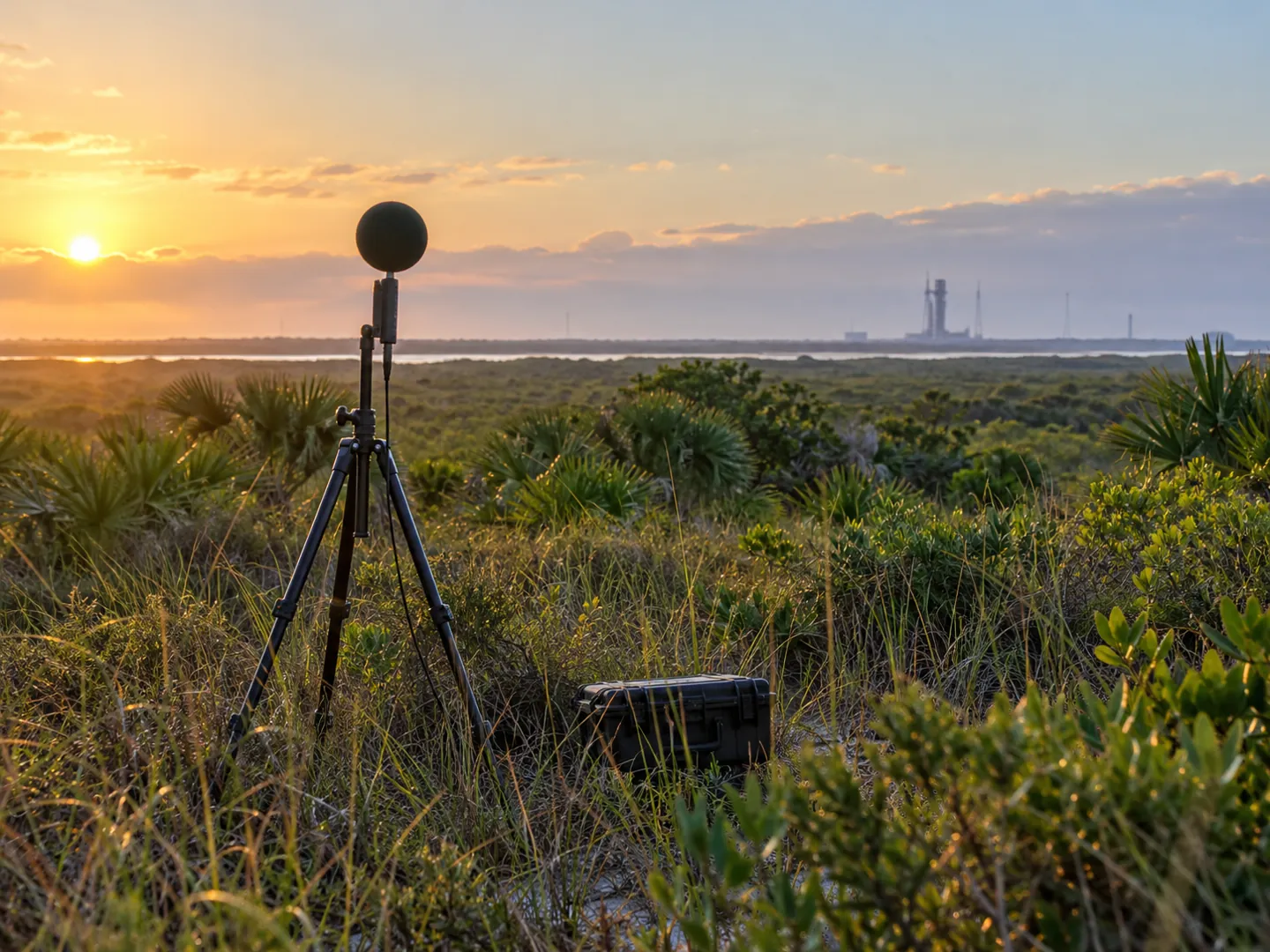
ON LAUNCH DAY
NASA describes the sound suppression system on its SLS launcher as a dampener for the noise of liftoff.
The system starts flowing about 20 seconds before T-zero, pouring onto the flame deflector, the launcher's flame hole and its blast deck.
Smoke and fire from the vehicle start about 10 seconds later. Liftoff noise comes from the supersonic exhaust mixing violently with the surrounding air.
In the confined space of the launcher, the hot exhaust creates pressure waves that can cause vibrations strong enough to damage the launcher and the rocket.
The sheets of water absorb some of the acoustic energy and weaken those pressure waves while the rocket climbs clear of the pad.
A LESSON FROM 1981
On the first Space Shuttle flight, STS-1 in 1981, an overpressure wave created by the solid rocket boosters damaged the orbiter's heat shield: sixteen tiles were lost and 148 were damaged. NASA says later changes to the water sound suppression system eliminated the problem.
Some old stories claimed the Saturn V's sound melted concrete and lit grass fires miles away. BYU researchers say the physics does not support that: any melting or fires were far more likely caused by heat from the exhaust plume or debris than by sound.
Questions
Mainly to reduce sound. The water absorbs some of the acoustic energy from the engines and weakens pressure waves that could damage the rocket, its payload and the launcher.
In a 2019 test for NASA's Space Launch System, about 450,000 gallons poured onto Pad 39B in 30 seconds, with a peak flow of over a million gallons a minute.
A few decibels. In NASA scale-model tests, above-deck water nozzles cut the overall noise by about 5 dB. Because decibels are logarithmic, that is a meaningful drop in energy.
NASA put SLS at about 176 dB at liftoff. BYU researchers measured the Artemis I launch at about 136-137 dB nearly a mile away.
BYU acousticians estimated its sound at 203 dB but say sound could not have melted concrete or started grass fires; heat from the plume or debris is the likely cause of any such damage.
Sources
ABOUT THIS NAME
soundeffectpads.com is part of the DoodleSale portfolio. It isn't in an auction right now, but you can ask about leasing it.